As the Church of Scotland in Bellshill we extend a warm welcome to any of our activities. People have been coming to this building to worship God for over a hundred years. While our town has journeyed through many changes over those years, the constancy of the witness of the “Church at 346 Main Street” has remained uninterrupted. The mission of any Church is to reflect through its presence, its music, its fellowship and its beauty the greatness of God, and we seek to do that here in all that we share.
We hope that everyone who enters these doors will find an encouraging, friendly group of people. While we are far from perfect, we are regularly discovering truths that are changing us individually and enriching our lives as a church community. As we worship together, learn from the Bible, and pray for one another, we are strengthened in our commitment to Jesus Christ as well as to each other. If this is your first time here, we welcome you, and invite you to share the joy that we have found.
Prayer for Acquaintances “God, today I offer up my daily Lenten prayers for (these specific neighbours, co-workers, church members or acquaintances). Please draw them to Yourself today. Please help me to be an inspiration and encouragement to them, and give me opportunities to talk about my faith and what You are doing in my life in a way that they can receive and benefit from. Thank You for bringing these people into my life.”
Prayer for Friends “God, please be especially close to (specific friend or friends) today. Help them to know You, love You and serve You. Help them resist any temptations they may face today, and bring them through any struggles they may currently be dealing with, including any hidden struggles I know nothing about. Please help me to be a positive influence and encouragement in their life as I draw near to You and inspire and encourage them to do the same.”
Sunday worship on Sunday 17th March will be held at Bellshill Central Parish Church, 346 Main Street, Bellshill, ML4 1BA
We meet at 11am for our morning service led by Mr Ian Douglas, with activities for young folks available via our Creche and Young Church.
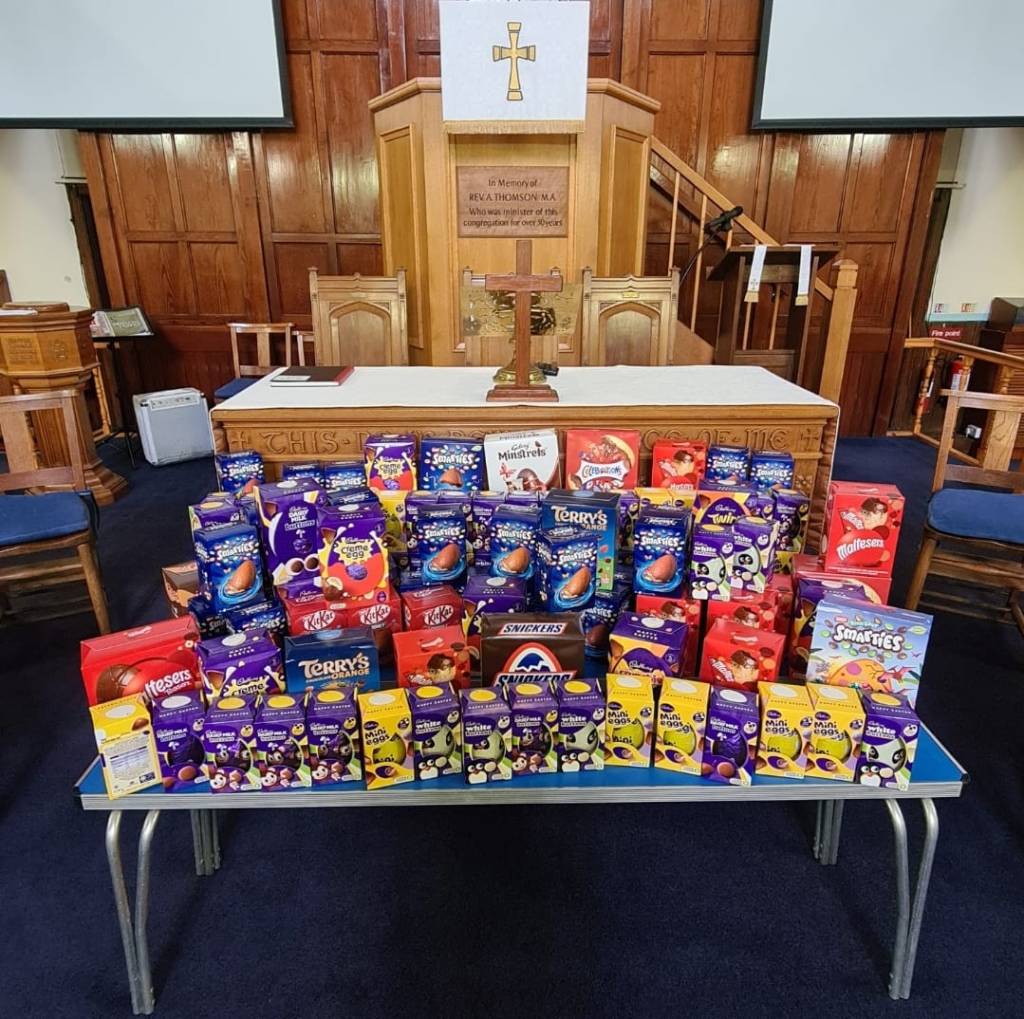
Frazer from Potts Funeral Directors will pop by to say thank you for the Easter Egg donations, so far collected. He will come back on 24th March to collect everything that has been donated.
We are once again one of the donation/collection points for the appeal and so far have over 100 eggs from our own congregation. Anyone in the local community can drop off eggs anytime we are open. They will be very gratefully received and passed on to Frazer at Potts on Palm Sunday.
During February and March we’re hosting Hope for Autism, with their interactive Dungeons and Dragons sessions. Each Wednesday in the hall from 10.45am to 12noon. Primarily for young adults aged 18+. Please share the details to all who might be interested.
The Guild meet on 11th March at 1.30pm when Colin Toal is the speaker, thinking about Lanarkshire Carers.
KIRK SESSION AND BOARD are called to meet on Tuesday 19th March at 7:30pm with our new interim moderator.
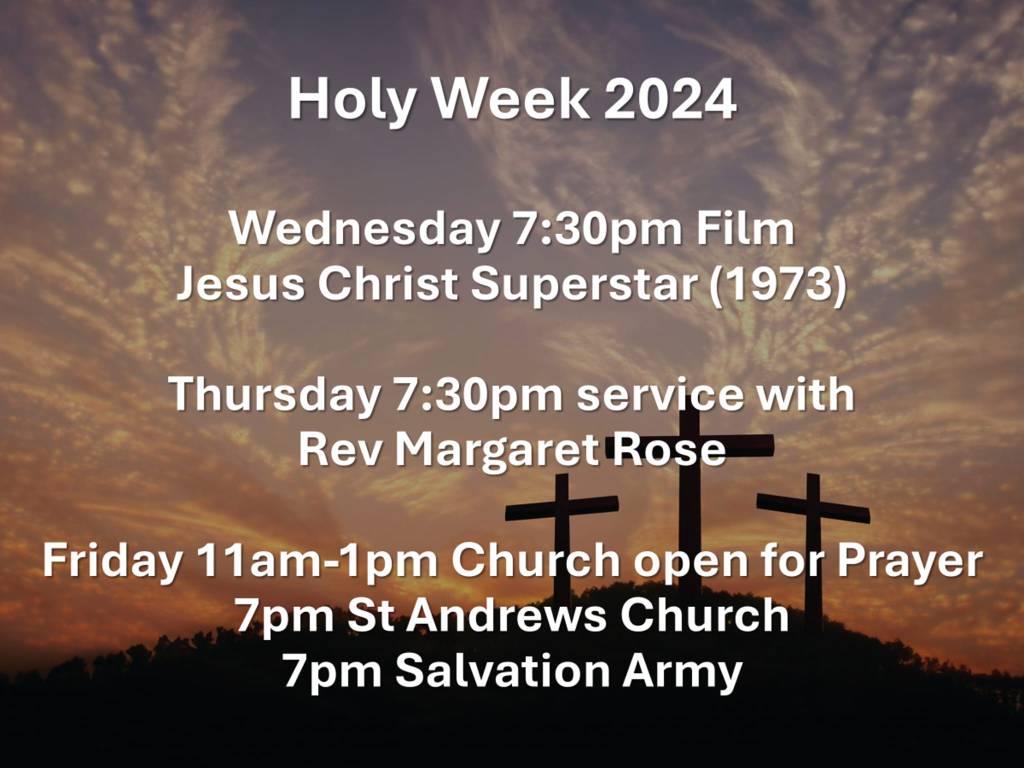
HOLY WEEK – Wednesday at 7.30pm Film Jesus Christ Superstar (1973), Thursday at 7.30pm Service of Communion with Rev Margaret. Good Friday – the Church is open for Prayer and Reflection from 11am – 1pm, in the evening we are invited to attend either St Andrews Church (7pm) or the Salvation Army with the Amsterdam Staff Band (7pm).
Easter Sunday – 9am Garden service led by the Church Prayer group, followed by a shared breakfast in the Hall. 11am All Age Service with communion led by the Revd Jim Zambonini.
FORTHCOMING EVENTS AND AN INVITATION IS EXTENDED TO ALL
Saturday 23rd March. DAFFODIL TEA will take place in the Church Halls between 1ppm-3pm, and will include delicious cakes and treats, and a Yellow Themed tombola. June’s world famous Lemon Curd will be making a re-appearance. If you have any empty curd/chutney jars left over from Christmas, or any jars, that can repurposes/recycled please pass to June Cook. Donations of any Yellow items for our Tombola are required. Items can be anything, as long as they are yellow! For example, yellow washing gloves (!), Yellow wrapped biscuits (Custard Creams perhaps), yellow candles, yellow spring treats etc. The list is endless. If you can help with donations of home baking please see Jane Aitken to see where you can help.
Sunday 24th March we will have Hot Cross buns served along with tea and coffee, and the opportunity to purchase leftovers from the Daffodil tea.
150TH ANNIVERSARYDATES FOR YOUR DIARY
We continue our celebrations on Friday 17th May when we are hosting a concert for the Church Family, Wider Church family and our local community – with the wonderful ladies choir Arietta conducted by Janet Young. The programme will include popular music and songs from stage, show and films. More details to follow but please save the date so you can come along.
We have been very lucky to book the incoming Moderator of the General Assembly of the Church of Scotland, the soon to be “Right” Rev Dr Shaw J Paterson. He will take part in worship on Sunday 20th October 2024. Shaw is known to many here at Bellshill Central Parish Church, and is a “local” lad from Holytown. Please mark that special date in your diaries.
Please direct any Pastoral or other enquiries to our Session Clerk, Mr Stanley Cook via 01698 747144 or by emailing hello@bellshillcentral.church or you can also send a message to the church Facebook page, and it will be forwarded on. Our part time locum minister, Rev Margaret ES Rose, can be contacted on minister@bellshillcentral.church
We collect for Orbiston Neighbourhood Centre each time we meet, for non-perishable items to be used in their community fridge project. Please drop items off in the main vestibule.
Regular Activities are:
Mondays
1.30pm The Guild.
7.30pm via Zoom Church prayer group
Tuesdays
9.30am Baby Sensory
6pm Rainbows
Wednesday
2pm Carpet Bowls
7pm Church Choir
Thursday
6pm Brownies
7.45pm Guides resumes
Saturdays
9.30am Yoga By Gillian (look up the page on Facebook)
Bellshill Central Parish Church is here for you. We are your church of Scotland presence in the town centre, Orbiston and Mossend and surrounding area.
Prayer for Your Children “God, thank You for my children. Please draw them to Yourself and hold them close. Help them to grow up to know You, love You and serve You all of their lives. Please keep them right in the center of Your will and keep them safe there. Please also give me the strength, courage and wisdom to raise them well.”