A Psalm a Day – Psalm 96

Psalm 96 New International Version

Psalm 96(A)

Sing to the Lord(B) a new song;(C)
    sing to the Lord, all the earth.
Sing to the Lord, praise his name;(D)
    proclaim his salvation(E) day after day.
Declare his glory(F) among the nations,
    his marvelous deeds(G) among all peoples.

For great is the Lord and most worthy of praise;(H)
    he is to be feared(I) above all gods.(J)
For all the gods of the nations are idols,(K)
    but the Lord made the heavens.(L)
Splendor and majesty(M) are before him;
    strength and glory(N) are in his sanctuary.

Ascribe to the Lord,(O) all you families of nations,(P)
    ascribe to the Lord glory and strength.
Ascribe to the Lord the glory due his name;
    bring an offering(Q) and come into his courts.(R)
Worship the Lord(S) in the splendor of his[a] holiness;(T)
    tremble(U) before him, all the earth.(V)
10 Say among the nations, “The Lord reigns.(W)
    The world is firmly established,(X) it cannot be moved;(Y)
    he will judge(Z) the peoples with equity.(AA)

11 Let the heavens rejoice,(AB) let the earth be glad;(AC)
    let the sea resound, and all that is in it.
12 Let the fields be jubilant, and everything in them;
    let all the trees of the forest(AD) sing for joy.(AE)
13 Let all creation rejoice before the Lord, for he comes,
    he comes to judge(AF) the earth.
He will judge the world in righteousness(AG)
    and the peoples in his faithfulness.(AH)

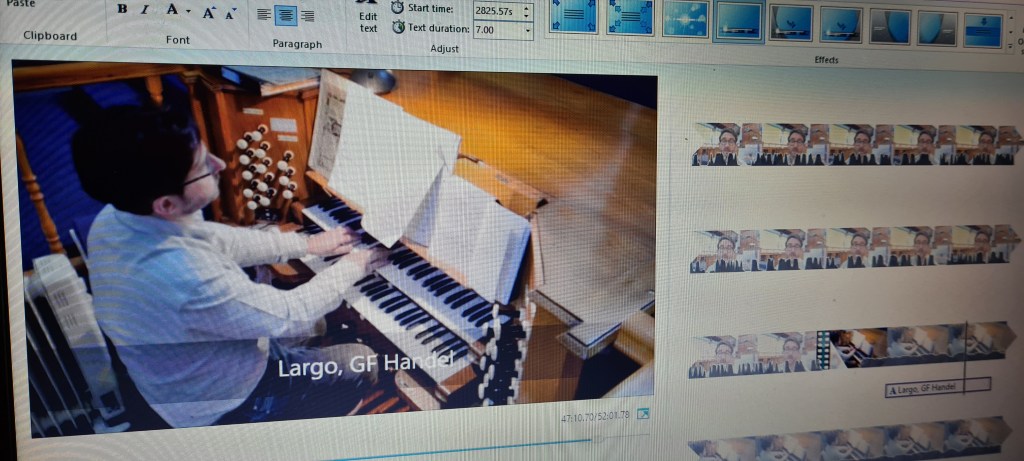
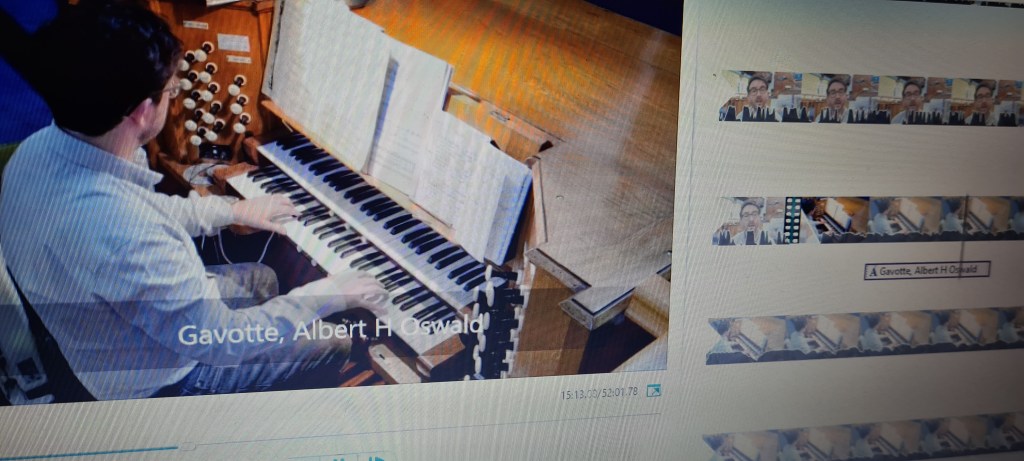
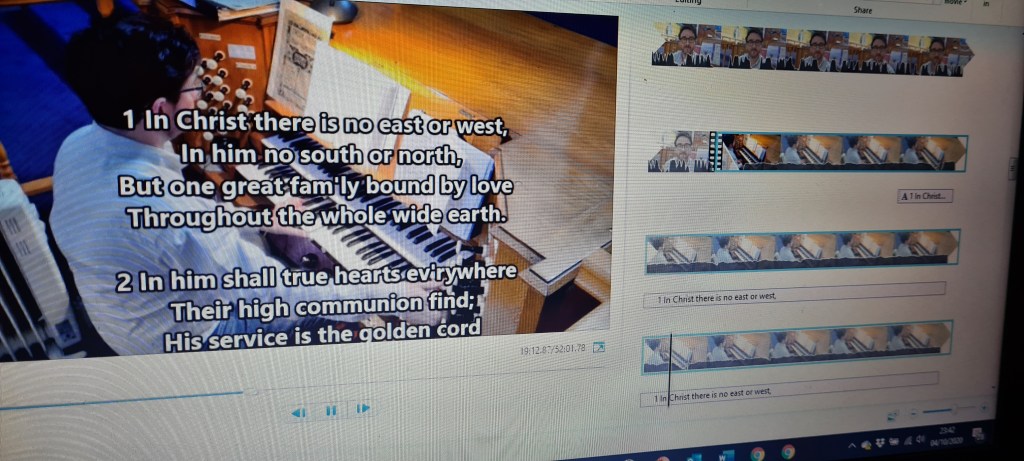
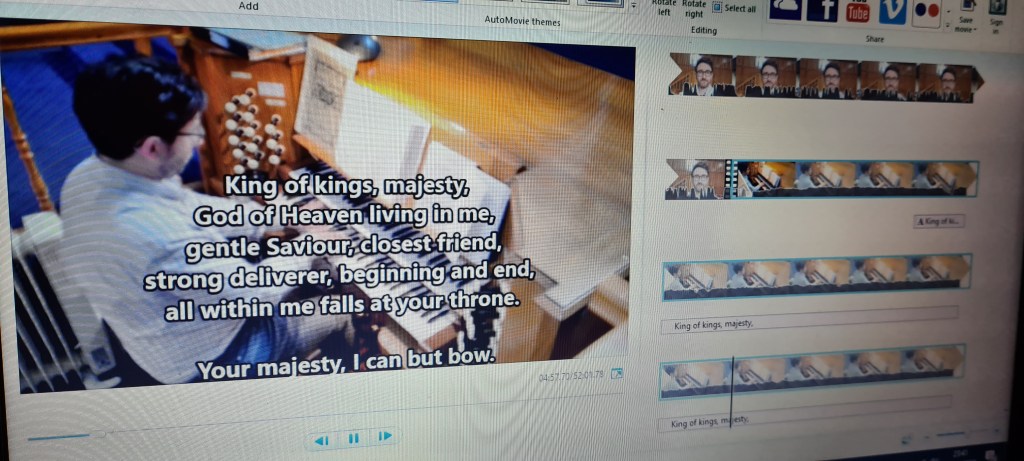
The Organist Entertains @ BCPC

Our Organist Entertains series is going from strength to strength. However, our maestro has taken a little break which means the content has changed for the Wednesday episodes for a few weeks.

We celebrated in our 21st milestone episode on Sunday 26th July and will premiere episode 22 with your requests and/or dedications on Sunday 2nd August at 8pm. You can watch that episode here

This week’s “midweek” Episode will premiere at 8pm on 5th August and will feature clips from two concerts held in Bellshill Central Parish Church which the organ plays a role in. The link will be made available as usual. The music is a mix of choral and organ. On Sunday 9th August at 8pm the regular requests will be available.

Please tell us your requests for our ongoing episodes. Get in touch via email bellshillcentral@gmail.com or Facebook or Twitter. If you’re part of the Bellshill WhatsApp group you can tell us there also.

Finally, lots of people have week by week sent messages expressing their thanks to our Maestro, Alan Mathew, for taking the time and making the effort to compile the lists, record the videos, research the items and edit together into the Organist Entertains episodes. We’re sure that you all agree with the sentiments of these messages and want to thank Alan for this music ministry helping keep you connected with each other and your Church.

A Psalm a Day – Psalm 95

Psalm 95 New International Version

Psalm 95

Come,(A) let us sing for joy(B) to the Lord;
    let us shout aloud(C) to the Rock(D) of our salvation.
Let us come before him(E) with thanksgiving(F)
    and extol him with music(G) and song.

For the Lord is the great God,(H)
    the great King(I) above all gods.(J)
In his hand are the depths of the earth,(K)
    and the mountain peaks belong to him.
The sea is his, for he made it,
    and his hands formed the dry land.(L)

Come, let us bow down(M) in worship,(N)
    let us kneel(O) before the Lord our Maker;(P)
for he is our God
    and we are the people of his pasture,(Q)
    the flock under his care.

Today, if only you would hear his voice,
“Do not harden your hearts(R) as you did at Meribah,[a](S)
    as you did that day at Massah[b] in the wilderness,(T)
where your ancestors tested(U) me;
    they tried me, though they had seen what I did.
10 For forty years(V) I was angry with that generation;
    I said, ‘They are a people whose hearts go astray,(W)
    and they have not known my ways.’(X)
11 So I declared on oath(Y) in my anger,
    ‘They shall never enter my rest.’”(Z)

The Blind Preacher Who Saw Quite Well: A Short Bio of George Matheson

George-Matheson

Some of the people who have impacted me the most in this life are those who have already passed from it.

The preachers and writers of old have recorded deep thoughts about God that still echo through the generations and continue to proceed from their grave. One of those men is George Matheson, otherwise known as “The Blind Preacher.”

In 1842 George and Jane Matheson had a child and named him George, obviously and proudly, after his father. His mother was the second cousin to his father, and they both resided in Glasgow, Scotland at the time George, their firstborn child, was birthed. He was the first of eight children, but the only one of his siblings who was born with poor eyesight.

Though his vision was blurry, his dreams for his future never seemed to be unclear. Through his growing-up years, he flourished in his education at Glasgow Academy and then pursued greater study at Glasgow University. He graduated with a Bachelor of Arts in 1861 with an emphasis on philosophy that would surely shed light on the writing he would do in his future. In 1862, only one year after finishing his Bachelors, he attained a Masters in philosophy as well.

While studying in school he would use powerful glasses to be able to see his work, and in-class would get the seat closest to the window for the best light. It was not long after he finished his studies until his poor sight drove him to become dependent upon others to accomplish almost anything. He was never completely blind, but he could only see shadows or outlines after finishing school.

In light of his ailment of poor sight, he had a reputation of being joyful, with a great spirit about him that was not easily discouraged. He didn’t speak of his bad eyesight, and most people who observed him preach or go about his life did not even know he was blind. There was only a short period where he seemed to struggle with great discouragement over his lack of eyesight, but it did not seem to stall him for long.

There are some allusions of a young woman who was in his life. He hoped to marry her, but she refused because he was mostly blind. Though we don’t know much about their relationship, if this is in fact true, it is not too much to fathom that this discouraged Matheson about his condition.

One of the great helps to overcoming his loneliness and accomplishing so much were his sisters. His eldest sister stuck by his side for years, helping him around the house and taking the time to write his dictations for him, including his early sermons. She also assisted with running the Parish at which Matheson served.

He was first licensed as a minister while serving at Sandyford by the presbytery. Here he assisted the lead minister, Dr. Macduff. The congregation was always impressed by what he could get done even with poor vision. He was only at Sandyford for a short while until he was granted more responsibility and given the opportunity to be the lead minister at Innellan.

In Innellan, Matheson’s popularity grew and he was soon a very famous preacher. His name was known throughout Scotland. People would travel from afar, especially around the religious holidays, to hear “Matheson of Innellan,” as he was commonly called.  Those who heard him preach did not know he was blind because it appeared as if he was regularly looking down at his notes. Obviously, Matheson’s greatest tool in the pulpit was not his writing or his notes, but his memory. His memory enabled him to remember his sermon along with large portions of Scripture.

Matheson served as pastor for 18 years in Innellan. In 1879 he was invited to move to London to minister there, but he declined (this would have been the same time that Charles Haddon Spurgeon, “The prince of preachers” was ministering in London – however it is unknown if Matheson and Spurgeon ever connected). In 1886 he moved to Edinburgh and became the minister of St. Bernard’s Church for an additional 13 years.

It is also important to note that in 1885 he was invited to come and preach to Queen Victoria by the Queen herself. He delivered a sermon entitled, “The Patience of Job.” The Queen was so moved by the sermon she asked for it to be printed and published for more people to be able to receive.

He was able to write many articles and books in his lifetime, some with the help of his sister, others with the help of a secretary, and then later in his life by using Braille and a typewriter.

Perhaps one of the greatest pieces Matheson ever wrote was a simple hymn, which he wrote on the night his sister was wed. His sister, the one he was so dependent upon, and who was a very special person to him, was starting a new chapter of her life. Her marriage would have filled him with deep emotion and an extra need for dependence upon God.

The hymn Matheson wrote on his sister’s wedding night was entitled, “O Love that Wilt Not Let Me Go.” When he later wrote about the hymn’s conception, he recounted the following:

My hymn was composed in the manse of Innellan [Argyleshire, Scotland] on the evening of the 6th of June, 1882, when I was 40 years of age. I was alone in the manse at that time. It was the night of my sister’s marriage, and the rest of the family were staying overnight in Glasgow. Something happened to me, which was known only to myself, and which caused me the most severe mental suffering. The hymn was the fruit of that suffering. It was the quickest bit of work I ever did in my life. I had the impression of having it dictated to me by some inward voice rather than of working it out myself. I am quite sure that the whole work was completed in five minutes, and equally sure that it never received at my hands any retouching or correction. I have no natural gift of rhythm. All the other verses I have ever written are manufactured articles; this came like a dayspring from on high.

It is obvious that this was a special time of manifestation of the Holy Spirit for Matheson as he recorded the words that seemed to be ‘dictated to him’ and were not his own. It was an overflow from the ‘dayspring on high’ and not merely his own trickling thoughts.

The severe mental suffering that he was experiencing that night is not told to us. However, the curious person can only wonder if it was the loss of his sister to marriage that was causing him such pain. Yet another option could be that he was greatly saddened by the wedding because it recounted to him the love he desired to have with a woman in his earlier years that never came to be. Though we do not know the cause of his distress, we can be certain by the outpouring of the hymn that he was comforted greatly by His Savior.

His first draft was his final draft, and that alone was shocking to him and seemed to verify the inspiration of God in the midst of this song’s creation. The only time noted of him changing the hymn was when it was first published in a hymnbook. The Hymn Committee asked him to change the word “climbed” to the word “traced” in the third verse; “I traced the rainbow through the rain.” He willingly did so without complaint.

Matheson was not a musician himself, though he wrote at least ten published hymns. He credits Dr. Albert Peace with writing the music for this special hymn. Each line of the hymn carries a deep theological thought that propels the listener to a deeper contemplation of God’s greater love and purposes than this life can offer. The words are as follows:

O Love that wilt not let me go,
I rest my weary soul in Thee;
I give Thee back the life I owe,
That in Thine ocean depths its flow
May richer, fuller be.

O Light that followest all my way,
I yield my flickering torch to Thee;
My heart restores its borrowed ray,
That in Thy sunshine’s blaze its day
May brighter, fairer be.

O Joy that seekest me through pain,
I cannot close my heart to Thee;
I trace the rainbow through the rain,
And feel the promise is not vain,
That morn shall tearless be.

O Cross that liftest up my head,
I dare not ask to fly from Thee;
I lay in dust life’s glory dead,
And from the ground there blossoms red
Life that shall endless be.

 In the first verse, Matheson captures the greatness that only comes from giving your life over to Christ (Matthew 10:39). On our own efforts, this life will be fleeting and produce nothing more than a weary and worn-down soul. Yet, a life that is given to Christ will experience a washing over by the depths of God’s love of which we cannot fathom (Ephesians 3:18), and will yield a life consumed by the very Creator and Redeemer of it.

We may try to shine a light by raising our own torch of hope, as surely Matheson had done as a minister. However, our flame is nothing more than a candle’s flicker in comparison to the Sun’s rays; the only way to bring true light to the darkness is to allow God’s glory to be reflected (or ‘borrowed’) in our life.

The rainbow is one of God’s greatest signs of joy and promises contained in the Bible. Surely Noah, and even God Himself, would have felt great sorrow after the flood. The rainbow stood as a promise to be traced back to God’s deep-seated joy of deliverance.

Finally, and most profoundly, it is the Cross of Christ that lifts our downcast head with eternal hope. When we lay life’s glory in the dust, it is there that we find the crimson blood of our Savior. Our abandonment of life’s dirt mixed with Christ’s seed of redemption blossoms a life of eternal joy, love, glory and forgiveness.

Mathenson’s impact on the world is to be noted; not because of his great writing, preaching or ability to overcome his limitations. Rather, his impact came when he realized that the greatest gift he could give the world was his own intimacy with Christ.

Imagine how the world might be different if you and I understood this as well. There is no telling the impact one can have on the world when he or she understand that it is not the world that should be their focus, but the Creator and Redeemer of it.