Communion Table and Lecterns

We look first at the Communion Table. It is placed centrally within the choir box. Our communion table is made of wood and was gifted to the Macdonald Memorial congregation in 1930 by Gavin Blackie JP.

img_20181102_22104625296931412663478.jpg

The use of a simple table, generally built of wood, instead of an altar made of stone reflects the Reformed churches’ rejection of the suggestion of sacrifice in the rite: they believe that the Passion of Jesus Christ was a perfect sacrifice for sins made once for all (Hebrews 9:25-10:4).

Having or not having a Communion table was a subject of dispute within Scottish Presbyterianism in the 17th century, with the Independents opposing its use.

There is an inscription of This do in remembrance of Me carved along the top above three carved gothic arches. The inscription is taken from the Last Supper (Luke 22:19, 1 Corinthians 11:24), indicating the belief in Holy Communion being a memorial rather than a sacrifice.

There are “motifs” carved into the detail of the table including the Cross, Trefoil and Quatrefoil. The Cross is significant as it is depicted as empty, and reminds us of Christ Risen from the Dead. The Trefoil signifies the Holy Trinity, The Quatrefoil leaves represent the four evangelists of the Bible: Matthew, Mark, Luke, and John.

Now we look at the two lecterns, also found in the Choir Box.

A lectern (from the Latin lectus, past participle of legere, “to read”) is a reading desk, with a slanted top, usually placed on a stand or affixed to some other form of support, on which documents or books are placed as support for reading aloud, as in a scripture reading, lecture, or sermon.

The free standing lectern is where the Bible Readings are read from each week during Sunday Worship, placed on it is the Good News Translation of the Bible. It was gifted by the family of William and Margaret Ferguson to The Macdonald Memorial Church in September 1972.

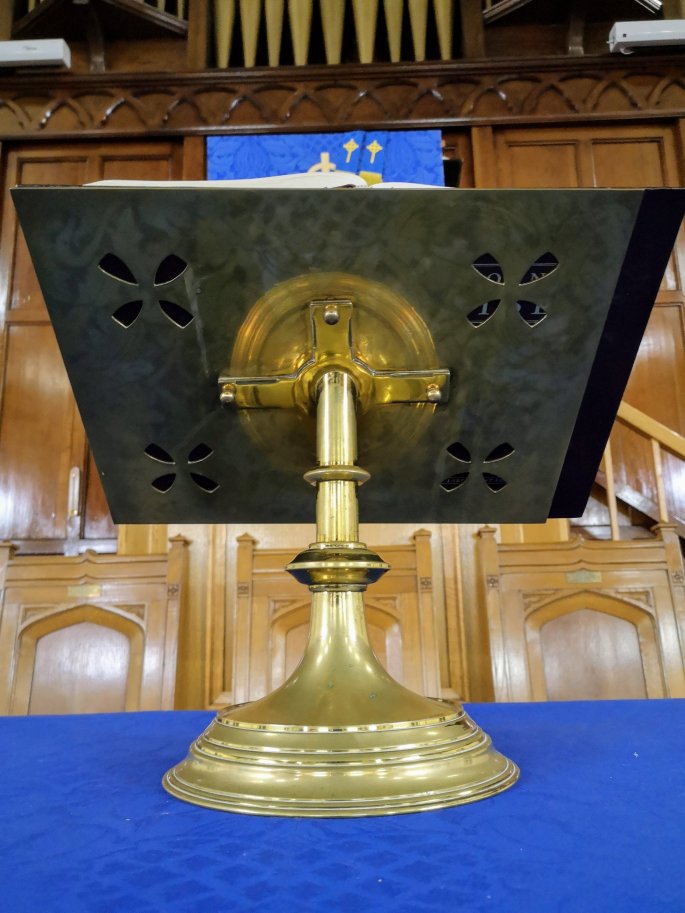
The brass table lectern is found on the Communion Table. The open bible placed on it shows significance of the Word as central to our Reformed Presbyterian worship. There are again symbols on this lectern. At each corner is found a quadruple pattern signifying the four evangelists. Hidden from view, underneath the Bible, is found a glorious engraving of the IHS symbol – a Christogram – a combination of letters that represent the holy name “Jesus.”
Escape into Egypt window

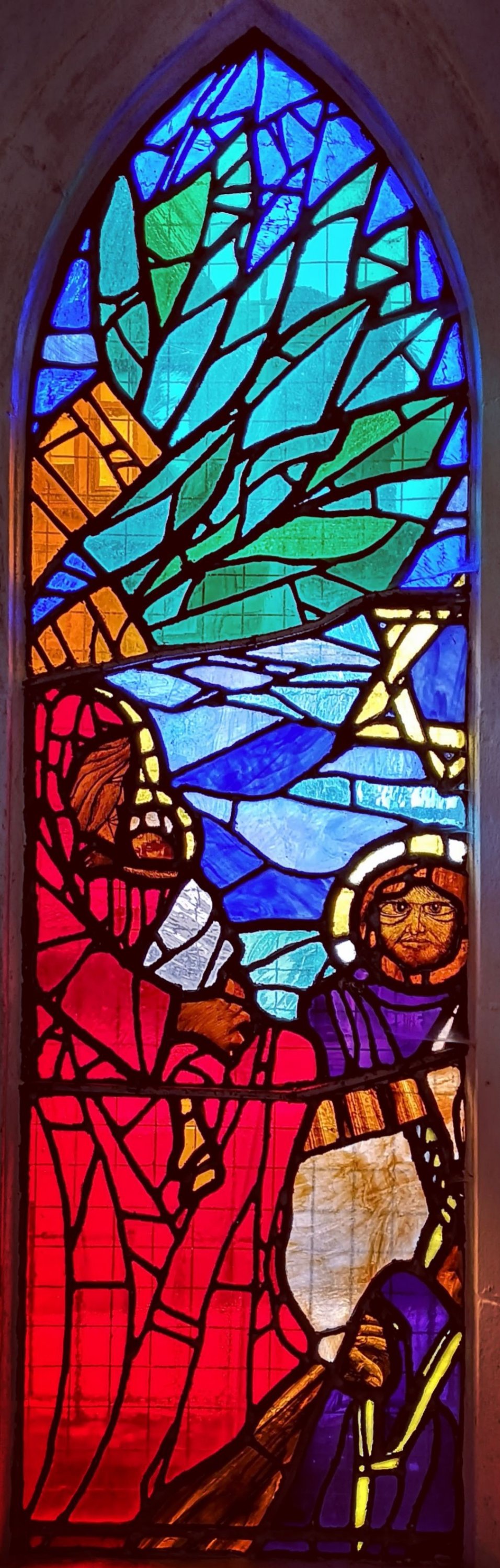
The Church is very fortunate to have this window and it is unique in that it was designed and made by one of the Church Members.

img_20181009_1720136872871140506094366.jpg

It is found in the east (or left) stair in the vestibule as you enter the Church, and is one of three lancet windows in the east stairwell. A lancet window is described as a slender pointed arched window. Read more here


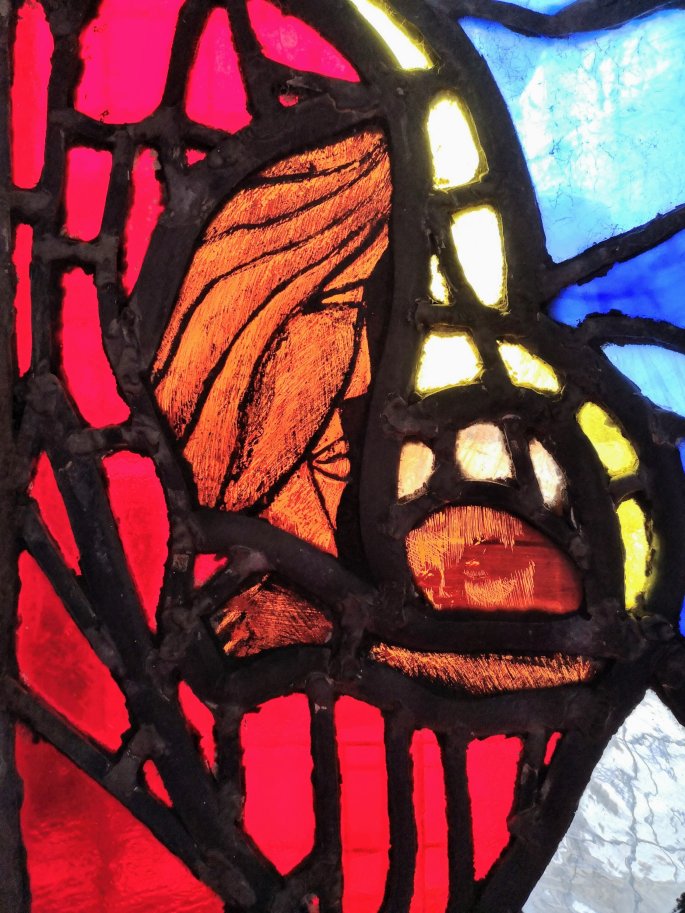
The window shows part of the Christmas Story in that we see Joseph with Mary carrying Jesus as they escape to Egypt. See Matthew 2; 13 (Page 5 of Pew Bible):

The Lord appeared in a dream to Joseph and said, “Herod will be looking for the child in order to kill him. So get up, take the child and his mother and escape to Egypt and stay there until I tell you to leave.”

Lesley Jackson was a 5th year pupil at Bellshill Academy when she began this remarkable project and it took her two years to complete. The window was installed in the Church around 1991 in memory of her grandfather, Tom Downs, who was a former elder and Session Clerk of the congregation.

Lesley, now Mrs Marshall and a Church Elder, continues to be an active and committed member of Bellshill Central Church.

The Macdonald Memorial Window

Bellshill Central Parish Church is extremely fortunate to have many beautiful stained glass windows.

This window is the earliest church window to replace the original leaded diamond glass design

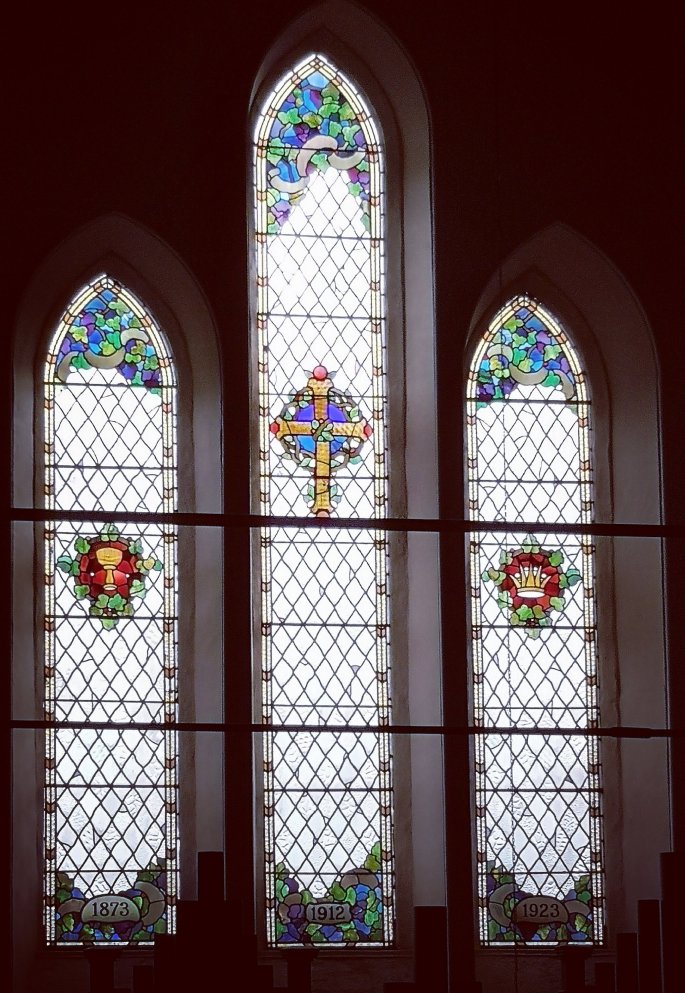
We call it the Macdonald Memorial window as it commemorates three major milestones in our church buildings history.

This window is above the pulpit and is almost hidden by the organ pipes which is rather a pity. It is best viewed from the upstairs gallery.

While not as decorative as the downstairs windows, it is still beautiful and it tells the history of Macdonald Memorial Church (now Bellshill Central Church).

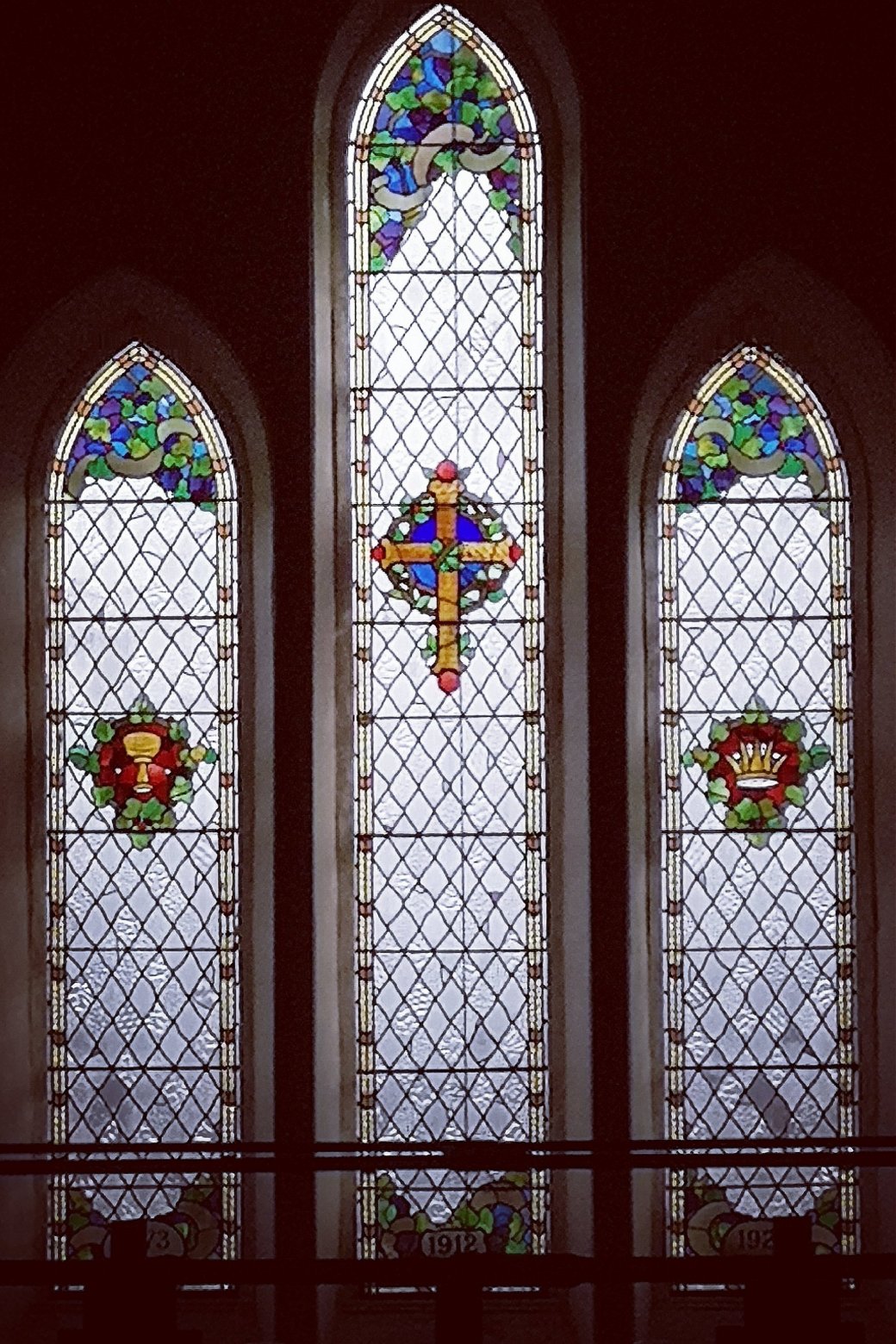
There are three separate arch windows with a sort of leaf pattern at the top and bottom in green, blue and purple.

  • The window on the left has a Communion Cup in the middle of it and the date 1873 at the bottom.
  • The middle window has a Cross in the centre and the date at the foot is 1912.
  • The right window shows a Crown in the middle and the date is 1923.

In January 1873, the Free Church Presbytery of Hamilton formed a committee to look at the surrounding areas to see where there was the greatest need for mission and decided on Bellshill and Mossend. However, it was actually a group of folk who had left Holytown Church who were instrumental in setting up the Mossend Mission. Originally, it met in the Mossend Schoolroom under the care of Rev Ogilvey and the Kirk Session of Dalziel Free Church. The first occasion that the Sacrament of the Lord’s Supper was observed was in October 1873 when Rev Ogilvey conducted the service.

William Macdonald, a Probationer of the Free Church of Scotland, was ordained and inducted to the Bellshill Free Church (still meeting in Mossend Schoolroom) on 31 December 1874. In June 1875, the congregation moved to the site of the present Church and built a hall which required them to borrow £300 from the Bank of Scotland. By August 1877 the Church had been built and decorated. Estimates for the build had been received at £2,700 although the final cost would appear to have been £3,200. The Manse was completed by March 1881 at a cost of £832.1s.8d.

On 28 August 1900, (in view of the union of the United Presbyterian Church and the Free Church of Scotland) the Church was named East United Free Church. In 1912 it was changed again, this time to Macdonald Memorial United Free Church in memory of Rev William Macdonald, its first minister.

The plaque at the front door of the Church in memory of Rev William Macdonald states that he was the ‘first pastor’ from the beginning in 1874 until 1906. It goes on to say that, ‘He was a devoted minister of the word, a zealous pastor and a true friend to his people.’

By 1923, it was 50 years since the Mossend Mission had been set up and the occasion was celebrated by large congregations at both services on Sunday, 28 October that year.

The Good Friday window

Bellshill Central Parish Church is extremely fortunate to have many beautiful stained glass windows.

The four central windows were gifted by Matthew Corbett, in memory of his son Sergeant James Brownlie Corbett of the Royal Air Force, who was shot down and killed over Holland on 26 May 1943. These windows were designed and fitted by the Abbey Studio, they are probably designed by JA Crombie. They were dedicated on 7 October 1962.


Good Friday – third window on the west or right side of the Church

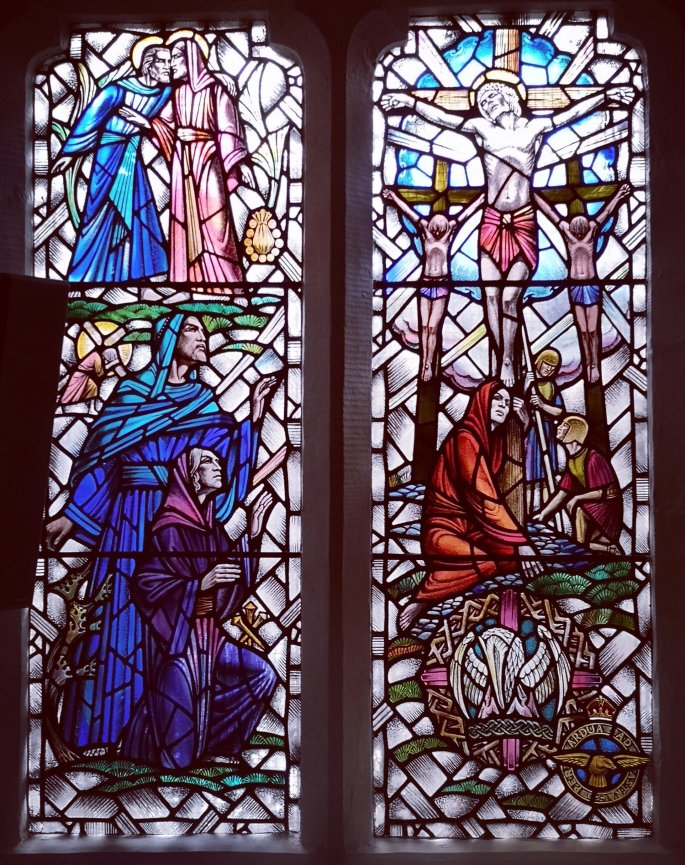
This is one of the windows placed in memory of James Brownlie Corbett, who was killed in 1943 while serving with the Royal Air Force. The RAF crest features in the bottom right hand pane of the window. The words on the crest are, “Per Ardua ad Astra” which translates as, “Through Struggles to the Stars.”

Above that, there is a picture of a pelican with two smaller birds under her wings; one on either side. Apparently, in medieval Europe, the pelican was thought to be particularly attentive to her young, to the point of providing her own blood by wounding her own breast when no other food was available. As a result, the pelican became a symbol of the Passion of Jesus.

The story of Good Friday begins in the top left hand pane where, as written in Matthew 26, 49 (page 40) – Judas went straight to Jesus and said, “Peace be with you, Teacher,” and kissed him. The bag of silver coins, which Judas later tried to return, can also be seen.

In the pane below Jesus can be seen carrying his cross before Simon of Cyrene was forced to help.

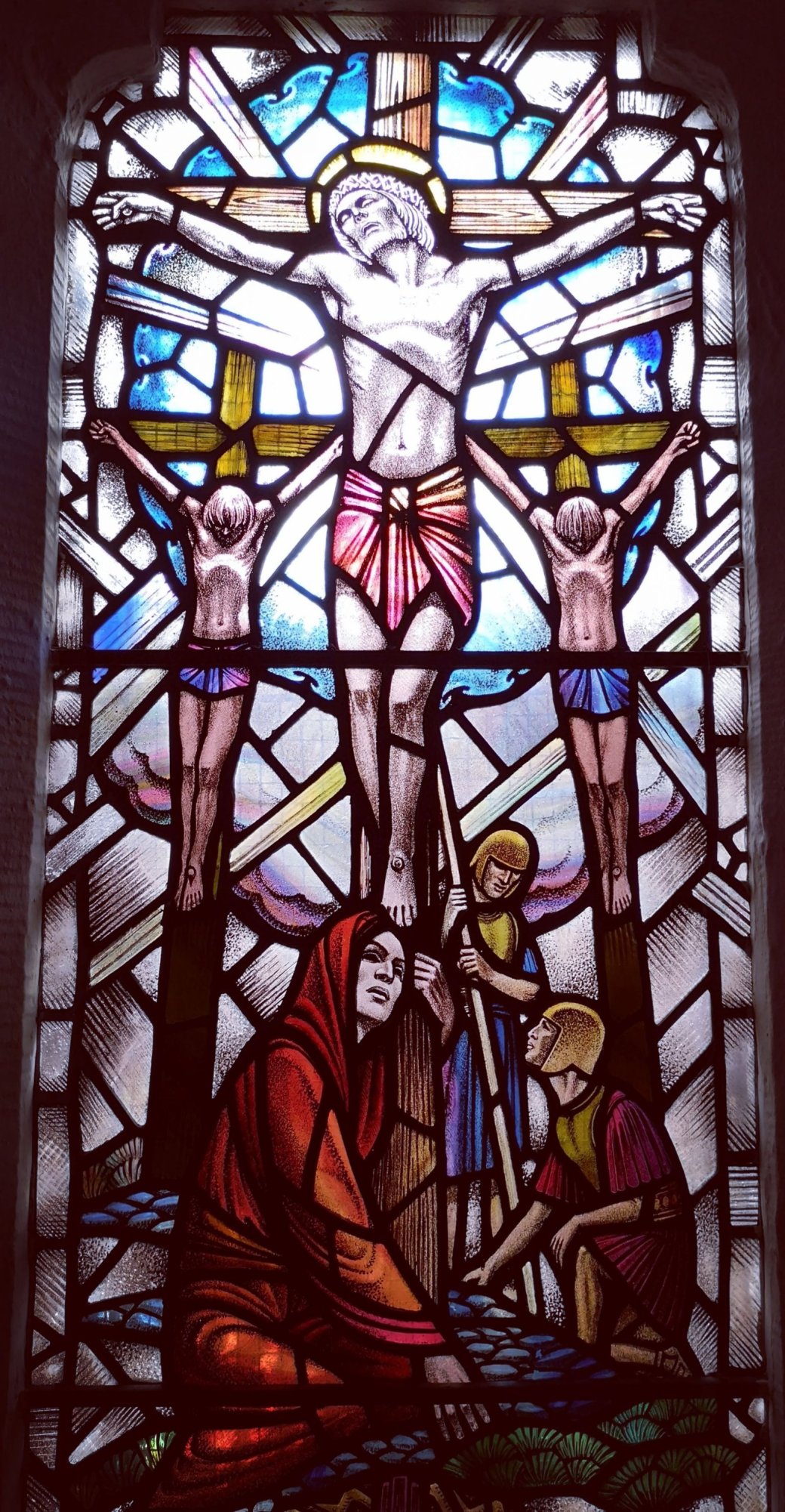
The right hand side of the window is dedicated to the crucifixion where Jesus can be seen with a criminal on either side. The crown of thorns is visible and some nails are also in the picture.

Some of the Jesus followers are shown, including a woman holding on to the cross.

Two soldiers are at the foot of the cross; Matthew 27, 54 (page 43) – When the army officer and the soldiers with him, who were watching Jesus, saw everything that happened, they were terrified and said, “He really was the Son of God!”